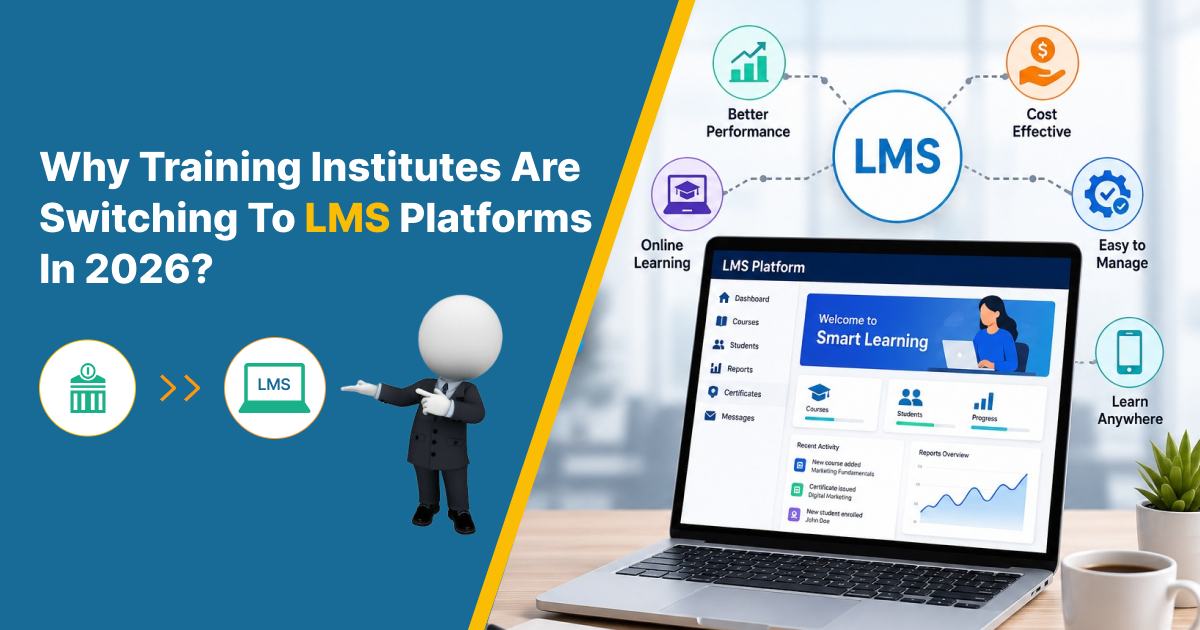
In 2026, training institutes are rapidly moving from traditional teaching methods to digital learning platforms. One of the main reasons behind this change is the growing use of Learning Management Systems (LMS). An LMShelps training institutes manage courses, students, assignments, attendance, and communication in one platform. It makes learning more organized, flexible, and efficient for both students and instructors.
1. Growing Demand for Online Learning Students today prefer flexible learning options that allow them to study anytime and from anywhere. Training institutes are adopting LMS platforms to provide online classes, recorded sessions, digital materials, and remote learning access. This helps institutes reach more students without location limitations.
2. Easy Student and Course Management Managing hundreds of students manually can be difficult and time-consuming. LMS platforms simplify this process by organizing:
- Studentenrollment
- Coursematerials
- Assignments andexams
- Attendancerecords
- Progress reports
Everything can be managed from one dashboard, saving time and reducing errors.
3. Better Communication and Collaboration LMSplatforms improve communication between students and instructors through:
- Discussion forums
- Messagingsystems
- Liveclass integration
- Announcementsandnotifications
This creates a more interactive and connected learning environment.
4. Automation Saves Time Automation is one of the biggest advantages of modern LMS platforms. Many repetitive tasks are handled automatically, such as:
- Attendancetracking
- Quizgrading
- Certificate generation
- Assignmentreminders
This reduces administrative workload and allows trainers to focus more on teaching.
5. Improved Learning Experience LMSplatforms provide students with a more engaging learning experience through:
- Interactive quizzes
- Videolessons
- Gamification features
Progress tracking Students can learn at their own pace and review lessons whenever needed.
6. Data and Performance Tracking Training institutes can use LMS analytics to monitor student performance and course effectiveness. Teachers can easily identify:
- Weaklearningareas
- Studentparticipation levels
- Coursecompletion rates
This helps improve teaching quality and student outcomes.
7. Cost-Effective and Scalable Solution Using an LMS reduces the need for printed materials, physical infrastructure, and manual administration. It is a cost-effective solution that can easily support both small and large training institutes. Institutes can also expand their courses online and reach more learners in different locations.8. Future-Ready Education System As technology continues to grow, digital learning is becoming the future of education. LMS platforms help training institutes stay modern and competitive by offering smart, flexible, and technology-driven learning solutions. Institutes using LMS today are better prepared for the future of education.