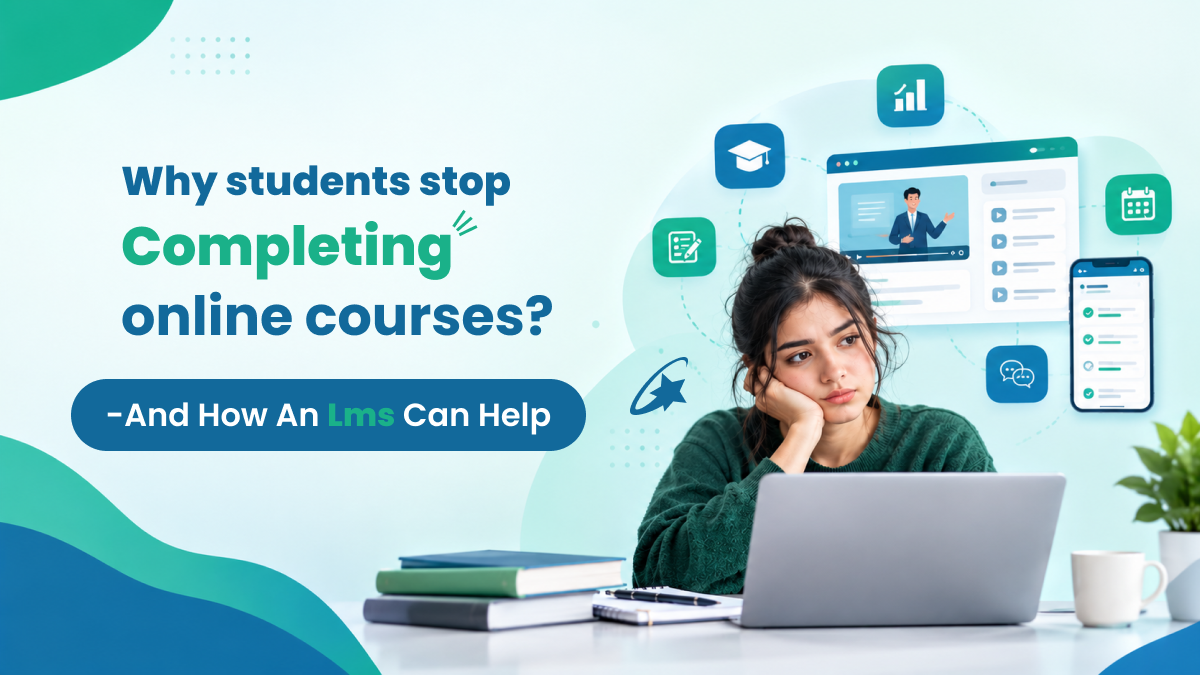
Online learning gives students flexibility, convenience, and access to educational content from almost anywhere. However, getting students to enroll in a course is only the beginning.
One of the biggest challenges for educational institutes is keeping students engaged until they actually complete the course.
A student may start a course with motivation but gradually stop attending classes, watching recorded lectures, completing assignments, or taking tests. This can happen for several reasons, including lack of structure, poor time management, limited interaction, and difficulty tracking progress.
A well-designed Learning Management System (LMS) can help institutes address many of these challenges by creating a more organized and engaging learning experience.
Why Do Students Drop Off From Online Courses?
1. Lack of a Clear Learning Structure
When learning materials are scattered across different platforms, students may not know what to study first or what they should complete next.
A clear course structure helps students understand their learning journey.
An LMS can organize courses into modules, lessons, assignments, quizzes, and assessments, giving students a clear path from one topic to the next.
2. Students Lose Motivation Over Time
Starting a new course can be exciting, but maintaining motivation for several weeks or months can be difficult.
Students are more likely to stay engaged when they can see their progress and understand how much they have already accomplished.
Progress indicators, completed lessons, test scores, certificates, and achievement milestones can give learners a sense of progress and encourage them to continue.
3. Recorded Classes Alone May Not Be Enough
Recorded lectures provide flexibility, but simply uploading videos does not guarantee that students will watch them.
Students may postpone lessons because there is no fixed schedule or accountability.
Institutes can combine recorded classes with live sessions, quizzes, assignments, and regular assessments. This creates a learning environment where students are not only consuming content but actively participating in the course.
4. Students Don't Know Where They Are Struggling
A student may complete several lessons but still struggle with specific concepts.
Without regular assessments, both the student and teacher may not realize where the learning gaps are.
Online quizzes, mock tests, assignments, and performance reports can help identify weaker areas. Teachers can then provide additional resources or support where needed.
5. Too Many Platforms Create Friction
Students often use different platforms for different activities:
* One platform for classes
* Another for study materials
* Another for assignments
* Messaging apps for announcements
* Separate tools for tests and results
Switching between multiple platforms can make learning unnecessarily complicated.
An LMS brings these activities together in one centralized environment, making it easier for students to access what they need.
How an LMS Can Improve Course Completion
A good LMS does more than host educational content. It can support students throughout their entire learning journey.
Structured Learning Paths
Courses can be divided into clear modules and lessons so students always know what to learn next.
Progress Tracking
Students can monitor completed lessons, pending activities, assessment results, and overall course progress.
Regular Assessments
Quizzes and tests encourage active learning while helping students identify areas that need improvement.
Live and Recorded Classes
Live classes provide interaction and accountability, while recorded lessons give students the flexibility to review topics whenever needed.
Personalized Learning
Based on performance and progress, institutes can provide additional learning materials or practice opportunities for students who need extra support.
Mobile Learning
Students can access lessons, tests, and learning resources from their mobile devices, making it easier to continue learning outside the classroom.
The Goal Is Not Just Course Completion
Course completion is an important metric, but it should not be the only goal.
The real objective is to create a learning experience where students remain engaged, understand what they are learning, receive feedback, and make continuous progress.
This is where an LMS becomes more than just a digital content library.
It can connect *teaching, learning, assessment, communication, and progress tracking* in one place.
How Mantra LMS Helps
Mantra LMS provides institutes with tools to manage courses, classes, assessments, student progress, and communication through a centralized learning platform.
Instead of simply providing students with access to educational content, institutes can create a more structured and measurable learning experience.
From live and recorded classes to online tests, progress tracking, and student management, Mantra LMS helps institutes support learners throughout their educational journey.