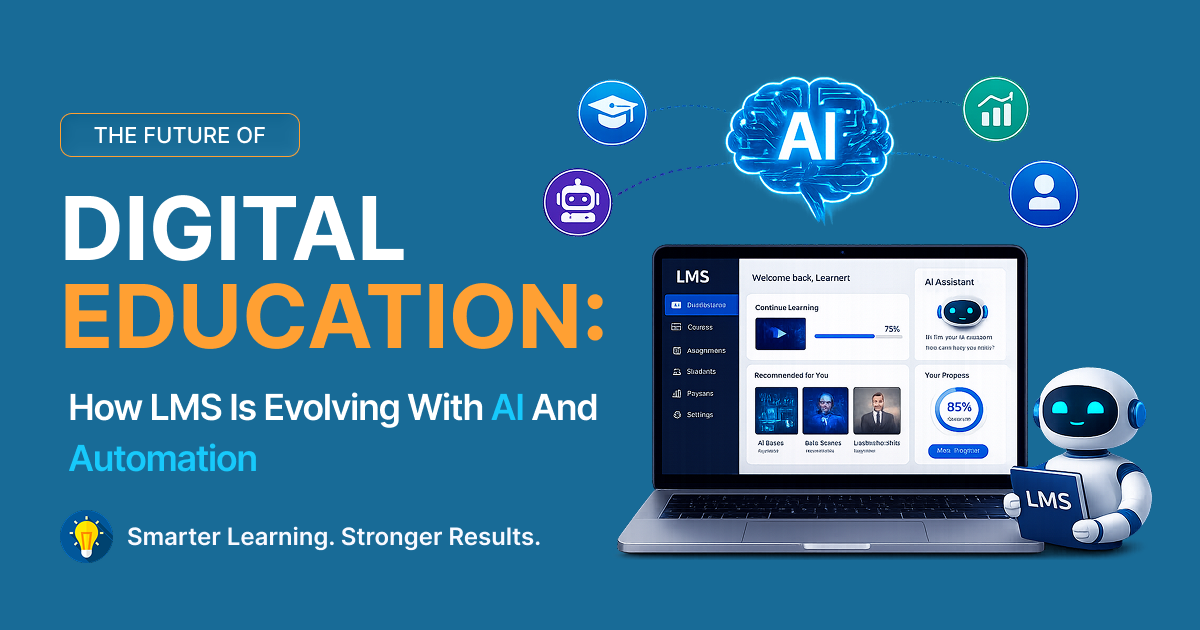
In today’s digital world, education is changing very fast. Traditional classrooms are now supported by online learning tools. One of the most important tools is the Learning Management System (LMS). An LMSisa digital platform that helps schools, colleges, and training institutes manage teaching and learning in one place. With the help of Artificial Intelligence (AI) and automation, LMS is becoming smarter, faster, and more efficient.
1. Smarter Learning with AI AI is making learning more intelligent and personalized. Instead of giving the same content to every student, AI helps the LMS understand each learner’s behavior and needs. It can suggest the right lessons, highlight weak topics, and recommend additional study materials. This helps students focus on what they truly need, making learning more effective and less confusing.
2. Personalized Learning Every student learns in a different way and at a different speed. Some understand quickly, while others need more time. AI-based LMS platforms solve this problem by allowing personalized learning paths. Fast learners can move ahead without waiting, while others can revisit lessons until they fully understand. This reduces pressure and improves overall learning quality.
3. Automation in Education Automation helps reduce manual work for teachers and administrators. Many routine tasks are now handled automatically by LMS systems. For example, attendance can be recorded automatically, quizzes can be generated instantly, and objective tests can be graded without manual effort. Notifications and reminders are also sent automatically to keep students updated.
4. Instant Feedback and Tracking One of the biggest advantages of modern LMS is instant feedback. Students don’t need to wait for days to know their results.They can immediately see quiz scores, track their progress, and understand which areas need improvement. Teachers also get clear reports to monitor each student’s performance and guide them better.
5. AI Chatbots for Support AI chatbots act like virtual assistants inside the LMS. They provide quick and helpful support to students anytime. Students can ask questions, find study materials, or get guidance without waiting for a teacher. These chatbots are available 24/7, making learning more convenient and accessible.
6. Engaging Learning Experience Modern LMS platforms are designed to keep students engaged and motivated. Learning is no longer boring or one-sided. Features like quizzes, gamification (badges and rewards), and smart video recommendations make learning more interactive and enjoyable. This helps students stay interested and actively participate in their studies.
7. Data-Driven Education LMSplatforms collect and analyze learning data to improve education quality. Teachers can see how students are performing, identify learning gaps, and improve course content accordingly. This data-driven approach helps institutions make better decisions and improve overall learning outcomes.
8. Future of LMS The future of LMS is very advanced and exciting. In the coming years, we will see AI-powered virtual classrooms, voice-based learning assistants, and even VR/AR-based learning experiences. Education will become more interactive, flexible, and personalized. LMS will not just support learning—it will fully transform how education is delivered.