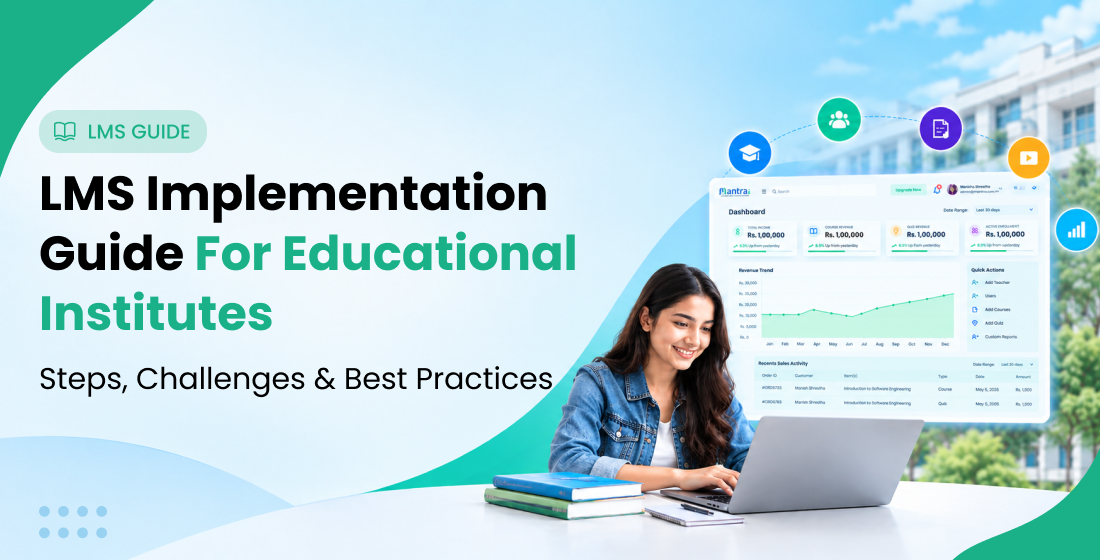
LMS Implementation Guide for Educational Institutes: Steps, Challenges & Best Practices?
Educational institutions are increasingly adopting digital learning platforms to make teaching, learning, assessment, and student management more organized. However, choosing a Learning Management System (LMS) is only the beginning. The real value comes from implementing the LMS properly and ensuring that teachers, students, and administrators can use it effectively.
A well-planned LMS implementation can help schools, colleges, universities, coaching institutes, and training centers create a structured digital learning environment. From setting up courses and migrating existing content to training staff and tracking student progress, every stage plays an important role in successful LMS adoption.
In this guide, we will explain the LMS implementation process, the key steps involved, common challenges, and best practices educational institutes can follow for a smoother transition to digital learning.
What Is LMS Implementation?
LMS implementation is the process of setting up, configuring, launching, and adopting a Learning Management System within an educational institution.
It involves much more than installing software. A complete LMS implementation process may include:
Defining institutional learning requirements
Setting up administrators, teachers, and student accounts
Creating courses and learning paths
Migrating existing learning content
Configuring assessments and examinations
Integrating live-class and other digital tools
Training teachers and administrators
Testing the platform
Launching the LMS
Monitoring usage and improving the learning experience
The goal is to create an LMS environment that fits the institution's teaching methods, learning objectives, and administrative workflow.
Why Is Proper LMS Implementation Important?
An LMS can provide many features, but simply having access to those features does not guarantee successful digital learning.
A structured implementation process helps institutions:
1. Create a Better Learning Experience
Students can access courses, lessons, assignments, assessments, and other learning resources from an organized platform.
2. Reduce Manual Work
Teachers and administrators can manage course content, assessments, student progress, and reports digitally instead of relying entirely on manual processes.
3. Improve Student Progress Tracking
An LMS can provide visibility into course completion, assessment results, and learner progress, helping teachers identify areas that require additional support.
4. Improve Communication
Announcements, notifications, discussion forums, and other communication tools can bring important learning-related information into one environment.
5. Support Flexible Learning
With web and mobile access, students can continue learning beyond the traditional classroom environment.
A modern LMS can bring course management, assessments, live classes, student engagement, progress tracking, and reporting together within one platform. Mantra LMS, for example, currently provides course and assessment management, live-class integrations, discussion forums, learning paths, progress tracking, analytics, and mobile learning.
8 Steps for Successful LMS Implementation
A clear implementation plan can make the transition to an LMS easier for both administrators and learners.
1. Identify Your Institute's Requirements
Before configuring an LMS, identify what your institution actually needs.
Ask questions such as:
How many students will use the platform?
How many teachers and administrators need access?
Do you need live and recorded classes?
Will students take online exams and quizzes?
Do you need certificates?
Do you need student progress reports?
Will the LMS be used across multiple branches?
Do students need mobile access?
What existing systems need to be integrated?
Clearly defining these requirements helps the institution choose and configure the right LMS environment.
2. Define User Roles and Responsibilities
An LMS usually involves different types of users, including administrators, instructors, students, and sometimes managers or other staff.
Each user should have appropriate permissions.
For example:
Administrators
Manage users
Configure courses
Manage reports
Control platform settings
Teachers
Create lessons
Upload learning materials
Conduct assessments
Monitor student progress
Students
Access courses
Attend classes
Complete assignments
Take quizzes and exams
Track their progress
Clearly defined roles help maintain organized access and simplify LMS management.
3. Organize and Migrate Existing Content
Many educational institutes already have learning materials stored in different formats and locations.
These may include:
PDFs
Videos
Presentations
Notes
Question banks
Assignments
Previous examination materials
Recorded classes
Before migration, review and organize these resources.
Remove outdated content, categorize materials by course or subject, and create a consistent structure.
A good content structure can make it easier for students to find what they need and understand what they should learn next.
4. Set Up Courses and Learning Paths
Once the content is organized, create a logical course structure.
For example:
Course → Module → Lesson → Activity → Assessment
Institutions can also create learning paths that guide students through their courses in a structured order.
This is particularly useful when courses contain multiple modules or when students need to complete certain lessons before moving to the next stage.
5. Configure Assessments and Online Exams
Assessments are an important part of digital learning.
Depending on the institute's requirements, an LMS can be configured for:
Quizzes
Online examinations
Mock tests
Assignments
Practice tests
Automated grading
Results
Performance reports
Regular assessments can help teachers understand student performance and identify learning gaps.
Mantra LMS currently supports quizzes, exams, mock tests, assignments, grading, and digital certificates.
6. Integrate Live Learning and Communication Tools
Many institutions use a combination of live classes and self-paced learning.
During implementation, configure the tools required for live and interactive learning.
These may include:
Video conferencing
Recorded classes
Discussion forums
Notifications
Announcements
Student communication
A centralized learning environment can reduce the need for students to switch between multiple platforms.
Mantra LMS supports integrations with video-conferencing platforms and also provides discussion forums, notifications, announcements, and progress-tracking features.
7. Train Teachers and Administrators
Even a feature-rich LMS will not deliver its full value if users do not know how to use it.
Provide training for teachers and administrators covering areas such as:
Creating courses
Uploading learning materials
Managing students
Creating assessments
Checking results
Tracking progress
Managing announcements
Generating reports
Training should be practical and based on the institution's actual workflow.
A simple onboarding process can help staff become comfortable with the platform before the official launch.
8. Test, Launch, and Improve
Before launching the LMS to all students, conduct a complete test.
Check:
User registration and login
Course access
Content visibility
Video playback
Assessments
Assignment submission
Notifications
Reports
Mobile responsiveness
User permissions
Integrations
Consider running a pilot program with a small group of teachers and students first.
After launch, monitor how users interact with the platform and collect feedback. LMS implementation should be treated as an ongoing process rather than a one-time project.
Common LMS Implementation Challenges
Educational institutes can face several challenges when implementing an LMS.
Resistance to Change
Teachers or staff who are accustomed to traditional methods may initially find a new platform unfamiliar.
Solution: Provide clear training, simple documentation, and hands-on practice.
Content Migration
Moving existing learning materials into a new system can require significant organization.
Solution: Audit existing content first, remove unnecessary materials, and migrate resources systematically.
Lack of Technical Knowledge
Some users may not be comfortable with digital tools.
Solution: Provide role-specific training and ongoing technical support.
Poor Course Organization
Uploading large amounts of content without a clear structure can make the LMS difficult for students to navigate.
Solution: Organize content into courses, modules, lessons, and assessments.
Low Student Engagement
Simply uploading recorded videos does not guarantee that students will actively participate.
Solution: Combine videos with quizzes, assignments, live sessions, discussions, and progress tracking.
Integration Issues
Institutes may already depend on different tools for communication, payments, video classes, or other activities.
Solution: Identify integration requirements before implementation and test each integration during the setup stage.
LMS Implementation Best Practices
Following a few best practices can make the implementation process more effective.
Keep the User Experience Simple
Teachers and students should be able to find courses, lessons, assessments, and important information without unnecessary complexity.
Start With the Most Important Features
Instead of trying to configure everything at once, begin with the features that directly support the institute's primary learning goals.
Use a Consistent Course Structure
A consistent format across courses makes the platform easier to navigate.
Make Mobile Access a Priority
Many learners access educational content through smartphones and tablets. A mobile-friendly LMS can help students continue learning beyond desktop environments.
Track Performance
Use reports and analytics to monitor course participation, assessment performance, and learner progress.
Collect Feedback
Ask teachers and students what is working and where they are experiencing difficulties. Use this feedback to improve the platform over time.
LMS Implementation Checklist
Before launching your LMS, use this checklist:
Define LMS objectives
Identify users and roles
Select and configure the LMS
Organize existing learning content
Migrate required materials
Create courses and learning paths
Configure quizzes and assessments
Set up live classes
Configure communication tools
Train teachers and administrators
Test user access and permissions
Test courses and assessments
Conduct a pilot launch
Collect user feedback
Launch the LMS
Monitor performance and continuously improve
How Mantra LMS Supports Educational Institutes?
Choosing an LMS that can support both current requirements and future growth is an important part of implementation.
Mantra LMS provides tools for course and assessment management, live classes, mobile learning, discussion forums, announcements, learning paths, progress tracking, analytics, custom reporting, and digital certificates. It also supports custom branding, multiple branches, and mobile applications.
This allows institutions to build a centralized digital learning environment rather than using separate platforms for every stage of the learning process.
Mantra LMS is designed for schools, training institutes, universities, and educators looking to deliver courses, assessments, and certifications through a unified platform.
Frequently Asked Questions About LMS Implementation
How long does LMS implementation take?
The timeline depends on the size of the institution, number of users, amount of content, required integrations, customization, and training requirements. A smaller implementation can be completed faster, while larger institutions may require a phased rollout.
What are the main steps in LMS implementation?
The main steps include identifying requirements, defining user roles, organizing content, configuring courses, migrating data, setting up assessments and integrations, training users, testing the platform, and launching the LMS.
What is LMS content migration?
LMS content migration is the process of transferring existing educational materials, courses, resources, or relevant data from an existing system or storage location into a new LMS.
How can teachers be trained to use an LMS?
Teachers can be trained through hands-on workshops, demonstrations, documentation, practice sessions, and ongoing technical support.
Can an LMS support both online and physical classes?
Yes. An LMS can support blended learning by combining classroom-based teaching with online courses, digital resources, assessments, recorded lessons, and live online classes.
Why is LMS implementation important for educational institutions?
A structured LMS implementation helps institutions organize digital learning, reduce manual processes, improve communication, track student progress, and create a more consistent learning experience.
Conclusion
Successful LMS implementation is about more than introducing new software. It requires planning, content organization, user training, testing, and continuous improvement.
Educational institutes should begin by understanding their learning requirements, preparing their content, defining user roles, configuring the necessary LMS features, and training their staff. After launch, monitoring learner engagement and collecting feedback can help the institution continue improving its digital learning environment.
With the right implementation strategy, an LMS can become a central platform for course delivery, online assessments, live classes, student engagement, progress tracking, and certification.
For schools, colleges, universities, coaching institutes, and training organizations planning their digital learning journey, a structured LMS implementation can provide a strong foundation for scalable and organized education.
Ready to take your institute's learning experience digital? Explore how Mantra LMS can help you build, manage, and scale your online learning platform.