LMS for Corporate Training: How Businesses Can Train Employees at Scale
Employee training is no longer limited to classrooms or one-time workshops. Businesses are increasingly using digital learning platforms to train employees, manage onboarding, develop skills, and track learning progress.
A Learning Management System (LMS) for corporate training gives businesses one centralized platform to organize, deliver, and monitor employee learning.
What Is an LMS for Corporate Training?
An LMS for corporate training is a digital platform that helps businesses create, manage, deliver, and track employee training programs.
From new employee onboarding to professional skill development, an LMS allows organizations to manage training in a structured and measurable way.
Why Do Businesses Need an LMS for Employee Training?
Managing employee training manually can become difficult as an organization grows. An LMS helps businesses:
- Centralize training materials
- Reduce repetitive administrative work
- Track employee learning progress
- Deliver consistent training
- Support remote and flexible learning
- Measure training completion and performance
Key Uses of an LMS for Corporate Training
1. Employee Onboarding
Give new employees structured access to company policies, processes, tools, and training materials from their first day.
2. Skill Development
Create learning programs to help employees develop technical, professional, and job-specific skills.
3. Compliance Training
Organize mandatory training and monitor completion across teams and departments.
4. Product & Process Training
Train employees on new products, services, internal systems, or updated business processes.
5. Remote Employee Training
Employees can access courses, learning materials, assessments, and live sessions from different locations.
Essential Features of a Corporate Training LMS
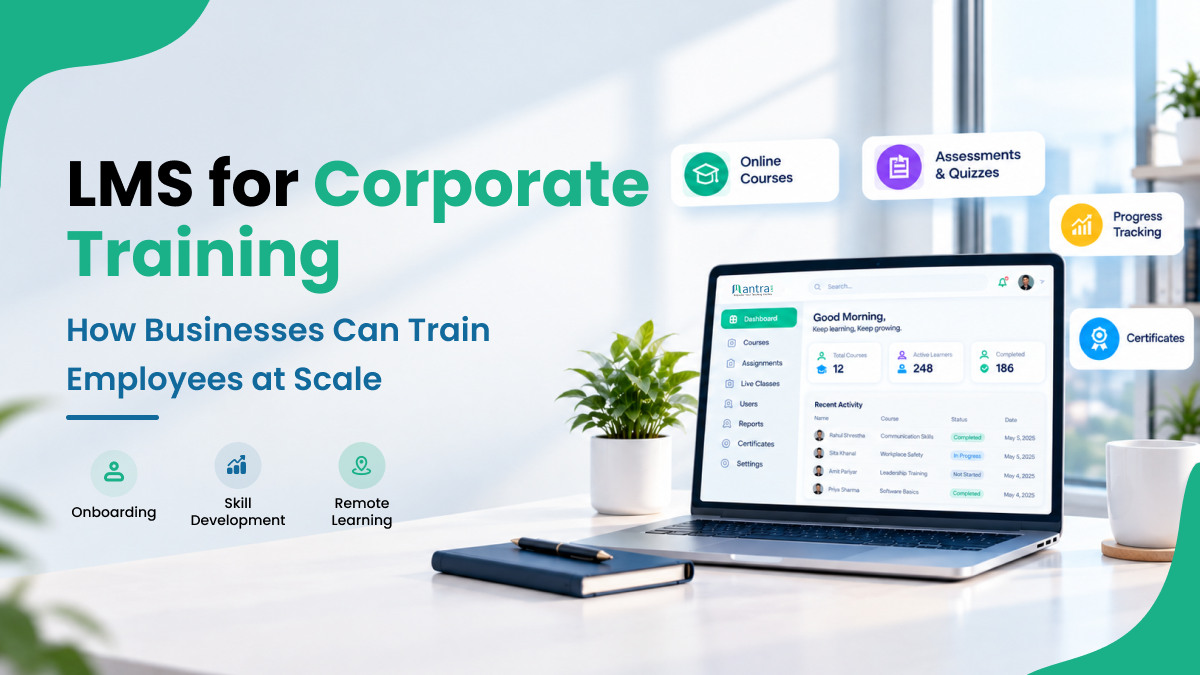
A useful corporate LMS should provide features such as:
Course Management – Create and organize training programs.
Assessments & Quizzes – Evaluate employee understanding.
Progress Tracking – Monitor course completion and learning activity.
Reports & Analytics – Understand training performance.
Certificates – Provide certificates after successful completion.
Live Classes – Conduct instructor-led training sessions.
Mobile Learning – Allow employees to learn from different devices.
Discussion & Communication – Support interaction between trainers and learners.
Benefits of Using an LMS for Corporate Training
With the right LMS, businesses can create a more organized and scalable training environment.
Centralized Learning
Keep courses, training materials, assessments, and employee learning records in one platform.
Consistent Training
Deliver the same structured training experience across teams, departments, and locations.
Better Progress Tracking
Managers and administrators can monitor employee participation and course completion.
Scalable Training
Train a small team or a large workforce without depending entirely on physical training sessions.
Flexible Learning
Employees can access learning materials according to their schedules and training requirements.
Best Practices for Corporate LMS Implementation
- To make employee training more effective:
- Create role-based learning paths.
- Keep training content clear and organized.
- Combine videos, documents, quizzes, and interactive content.
- Track completion and assessment results.
- Collect employee feedback.
- Regularly update training materials.
How Mantra LMS Supports Corporate Training?
Mantra LMS provides a centralized platform for organizations to manage digital learning and training programs.
Businesses can use features such as course management, assessments, live classes, progress tracking, reports, certificates, discussion forums, and interactive learning content to create a structured training environment.
Whether it is employee onboarding, skill development, or ongoing professional training, an LMS can help organizations manage learning more efficiently.
Frequently Asked Questions
What is an LMS for corporate training?
An LMS for corporate training is a digital platform used to deliver, manage, and track employee training programs.
Can an LMS be used for employee onboarding?
Yes. Businesses can create dedicated onboarding courses covering company policies, processes, tools, and role-specific training.
Can an LMS support remote employees?
Yes. Employees can access online courses, assessments, and live training sessions from different locations.
How does an LMS help HR and training teams?
It can centralize training content, automate parts of the training process, track completion, and provide learning reports.
Conclusion
Corporate training becomes easier to organize when learning, assessments, progress tracking, and reporting are managed from one platform. An LMS for corporate training can help businesses create structured learning programs while supporting employees throughout their professional development.
Looking to build a structured digital training environment for your organization? Explore Mantra LMS.