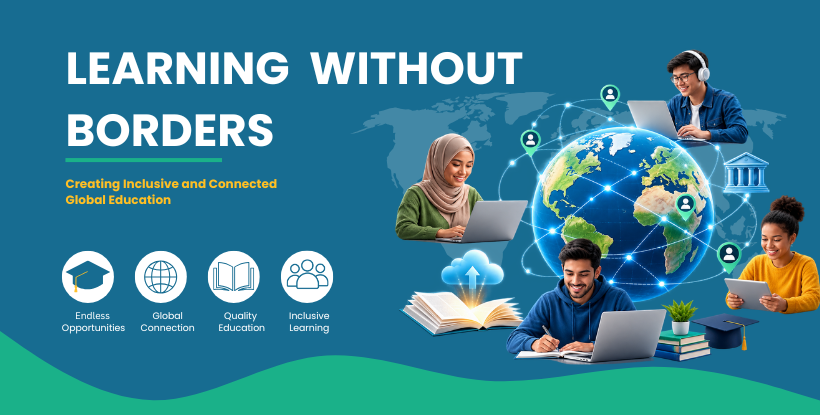
Learning Without Borders: Creating Inclusive and Connected Global Education ?
Learning Without Borders is a modern approach to education that uses technologies like LMS, AI, cloud computing, and virtual classrooms to make learning accessible beyond geographical boundaries. It allows learners and educators from different countries, cultures, and backgrounds to connect, learn, and share knowledge.
What Does It Mean?
Traditional education is often limited by location, fixed schedules, and access to local resources. Digital learning reduces these limitations by allowing learners to:
* Access courses from anywhere
* Learn at flexible times
* Attend virtual classes
* Access digital resources
* Connect with instructors and learners globally
* Track progress and earn digital certificates
Why Is Inclusive Education Important?
Global education should be accessible to learners with different languages, cultures, abilities, financial situations, and levels of technology access. Features such as multilingual content, captions, mobile-friendly platforms, and flexible schedules can make learning more inclusive.
Role of Technology
LMS: Manages courses, learners, assessments, resources, and progress in one platform.
AI: Supports personalized learning and recommends relevant content.
Virtual Classrooms: Connect teachers and learners in real time from different locations.
Cloud Technology: Makes learning platforms and resources accessible across devices and locations.
Challenges
Creating borderless education still requires addressing the digital divide, language barriers, accessibility, cultural differences, and digital literacy. Technology alone is not enough; institutions also need inclusive and affordable learning strategies.
Future of Global Learning
The future of education is becoming more flexible, connected, personalized, and technology-driven. AI, mobile learning, virtual classrooms, and digital credentials can further connect learners around the world.
Conclusion
Learning Without Borders aims to create an education system where geographical location does not limit learning opportunities. With the right combination of technology, accessibility, flexibility, and inclusive design LMS platforms can help build a truly connected global learning environment.