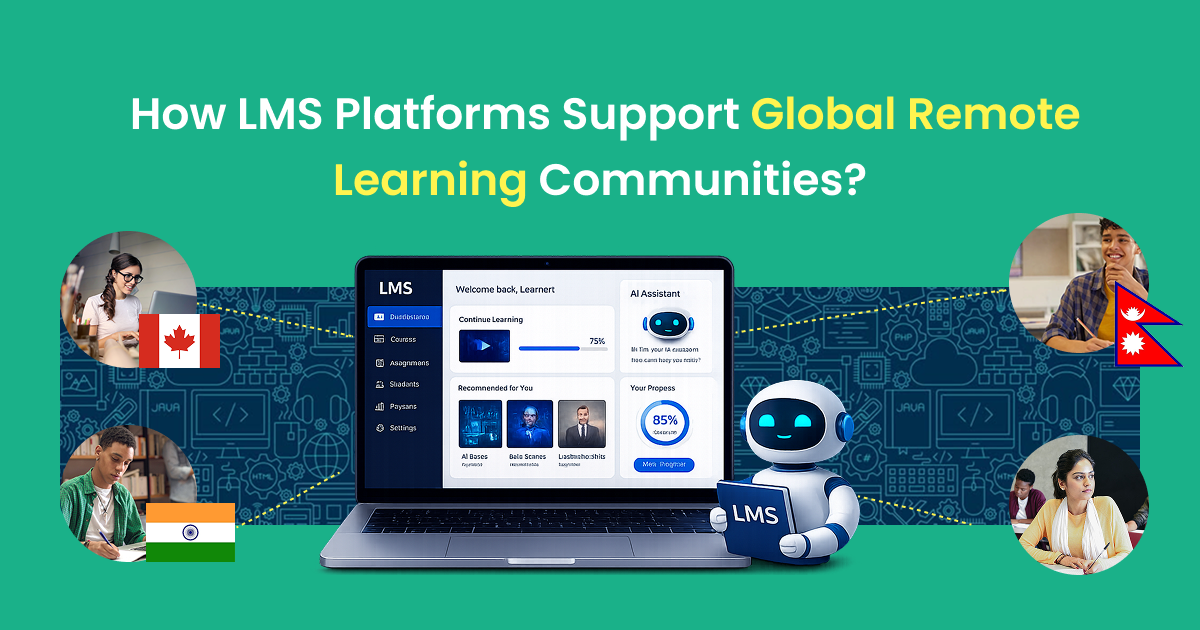
In today’s digital world, learning is no longer limited to classrooms or geographical boundaries. Students, teachers, and professionals from different countries can now connect and learn together through online platforms. This is made possible by Learning Management Systems (LMS), which play a major role in building global remote learning communities.
An LMS is not just a learning tool—it is a global education hub that connects learners across borders, cultures, and time zones.
What is a Global Remote Learning Community?
A global remote learning community is a group of learners and educators who interact, collaborate, and learn together online from different parts of the world.
These communities allow:
- International collaboration between students and teachers
- Real-time communication and discussions
- Sharing of global knowledge and resources
- Learning without physical boundaries
- How LMS Platforms Enable Global Learning Communities
1. Anywhere, Anytime Learning Access
LMS platforms allow learners to access courses from anywhere in the world. This removes the barrier of location and time zones, making education truly global.
Students can:
- Learn at their own pace
- Access recorded lectures anytime
- Participate from any device (mobile, laptop, tablet)
2. Communication & Collaboration Tools
Modern LMS platforms include features like:
- Discussion forums
- Live chat systems
- Group activities
- Video conferencing integration
These tools help learners from different countries communicate and work together easily, creating a strong global learning network.
3. Peer-to-Peer Learning Across Borders
One of the strongest benefits of LMS is peer learning. Students can:
- Share ideas globally
- Work on international group projects
- Learn from different cultural perspectives
- This builds teamwork and improves global understanding among learners.
4. Centralized Learning System for Everyone
An LMS acts as a single platform where all learning materials are stored, including:
- Video lessons
- Assignments
- Quizzes
- Study resources
This ensures that every learner—no matter where they are—gets equal access to quality education.
5. Personalized Learning Experience
LMS platforms use data and analytics to track student progress and offer personalized recommendations.
This helps global learners:
- Learn based on their skill level
- Improve weak areas
- Follow customized learning paths
6. Breaking Language & Cultural Barriers
- Advanced LMS platforms support:
- Multi-language content
- Auto-translation tools
- Subtitles and captions
- This makes learning easier for international students and promotes inclusive education.
7. Cloud-Based Global Connectivity
Cloud-based LMS systems allow institutions to:
- Connect learners worldwide
- Scale learning programs easily
- Manage thousands of students from different regions
- This is essential for building large global learning communities.
Benefits of Global LMS Learning Communities
- Access to international education resources
- Improved communication skills
- Exposure to different cultures and ideas
- Better career opportunities globally
- Flexible and self-paced learning
Challenges in Global Learning Communities
Even though LMS platforms are powerful, there are still challenges:
- Internet access issues in some regions
- Time zone differences
- Language barriers
- Lack of engagement in self-learning environments
However, modern LMS solutions are continuously improving to solve these problems.
Future of Global Remote Learning
The future of LMS-based global education includes:
- AI-powered virtual classrooms
- Real-time translation during lectures
- VR/AR-based immersive learning
- Fully global online universities
- Stronger international certification systems
Education is moving toward a world where everyone learns together, everywhere.