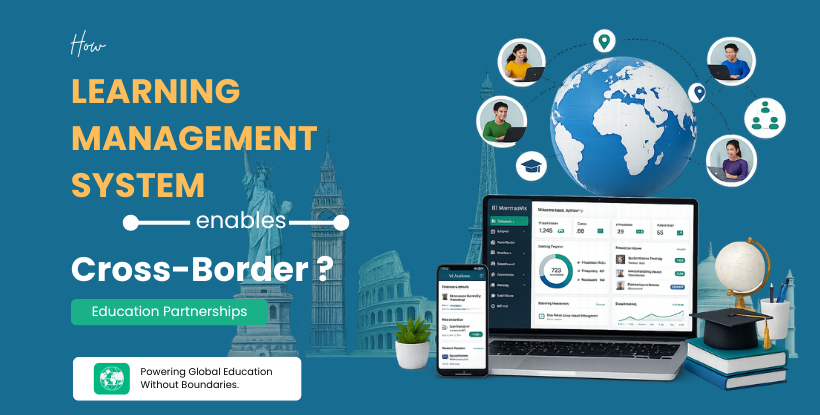
A Learning Management System (LMS) enables cross-border education partnerships by providing a centralized platform where universities, training institutes, businesses, and organizations from different countries can collaborate and deliver learning programs. With cloud-based access, multilingual support, virtual classrooms, online assessments, and learning analytics, an LMS helps ensure a consistent and engaging learning experience for students worldwide. As global education continues to expand, LMS platforms have become essential for building scalable, accessible, and high-quality international learning initiatives.
How Learning Management Systems Enable Cross-Border Education Partnerships ?
Education is no longer confined to classrooms or national borders. Today, learners can access courses from institutions around the world, while organizations can deliver training to employees across multiple countries. This shift has created new opportunities for global collaboration, making education more flexible and accessible than ever before.
Managing international learning programs, however, requires more than simply sharing online content. Institutions need a reliable way to organize courses, communicate with learners, track progress, and maintain consistent learning standards. A Learning Management System (LMS) simplifies this process by bringing everything together on one secure digital platform.
Understanding Cross-Border Education Partnerships
Cross-border education partnerships are collaborations between educational institutions, training providers, businesses, or organizations located in different countries. These partnerships allow them to share knowledge, co-develop courses, and provide learning opportunities to a global audience.
For example, universities can offer joint degree programs, while multinational companies can deliver standardized employee training across their international offices. An LMS serves as the central platform that supports these collaborations efficiently.
Why LMS Is Essential for Global Learning ?
An LMS helps institutions manage international education by providing one centralized system for course delivery, communication, assessments, and learner management. Because it is cloud-based, students and instructors can access learning materials anytime and from anywhere, creating a seamless experience regardless of location.
Modern LMS platforms also support multilingual content, virtual classrooms, discussion forums, and mobile learning, making education more inclusive and accessible for learners from different countries and cultural backgrounds.
Benefits of LMS for Cross-Border Education
Using an LMS offers several advantages for international education partnerships, including:
* Centralized course and learner management
* Consistent learning experiences across countries
* Multilingual and mobile-friendly learning
* Real-time collaboration through virtual classrooms
* Automated assessments and digital certificates
* Learning analytics for tracking progress
* Reduced administrative workload
* Scalable education for global audiences
The Future of International Learning
As digital education continues to grow, international collaboration will become even more common. Technologies such as artificial intelligence, personalized learning, and real-time language translation are making global education more accessible and engaging. A modern LMS provides the foundation for these innovations, helping institutions expand their reach while delivering high-quality learning experiences across borders.
Conclusion
Cross-border education partnerships are transforming how knowledge is shared worldwide. A Learning Management System enables institutions to collaborate effectively, deliver consistent education, and connect learners regardless of location. By removing geographical barriers and supporting flexible digital learning, an LMS plays a vital role in building the future of global education