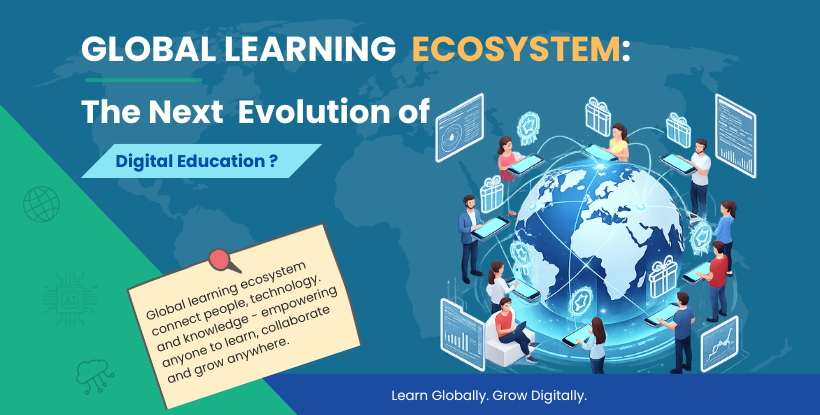
A Global Learning Ecosystem is a digitally connected learning network that brings together students, educators, institutions, and organizations through advanced technologies. By integrating **Learning Management Systems (LMS), artificial intelligence (AI), virtual classrooms, cloud computing, mobile learning, and collaboration tools**, it enables flexible, personalized, and accessible education. These ecosystems eliminate geographical barriers, encourage global collaboration, and support continuous learning for people around the world.
Global Learning Ecosystems: The Next Evolution of Digital Education
Digital innovation has completely reshaped the way education is delivered. Learning is no longer limited to physical classrooms or specific locations. Today, individuals can access online courses, attend virtual classes, collaborate with peers across countries, and earn certifications from virtually anywhere.
A Global Learning Ecosystem makes this possible by connecting learners, educators, institutions, and digital technologies into one unified environment. It provides an efficient and scalable approach to education, helping schools, universities, training institutes, and businesses deliver high-quality learning experiences to a global audience.
What Is a Global Learning Ecosystem?
A Global Learning Ecosystem is a unified digital learning environment that combines educational technologies, communication platforms, learning resources, and data-driven tools into a single system. It allows learners to access educational content anytime and from any location while promoting collaboration between educators, institutions, and learners.
A typical global learning ecosystem may include:
* Learning Management Systems (LMS)
* Virtual classrooms
* Mobile learning platforms
* Video conferencing tools
* Online assessments
* Digital certificates
* Learning analytics
* AI-powered learning features
* Collaboration and communication tools
* Cloud-based educational resources
Together, these technologies create a connected learning environment that supports effective and continuous education.
Why Are Global Learning Ecosystems Important?
Today's learners expect education that is convenient, engaging, and personalized. At the same time, educational institutions and organizations require scalable solutions to deliver consistent learning experiences across different regions.
Global learning ecosystems help meet these expectations by:
* Eliminating location-based learning barriers
* Supporting online, hybrid, and self-paced learning
* Making quality education more accessible
* Encouraging lifelong learning and professional development
* Connecting learners and educators worldwide
As digital education continues to expand, global learning ecosystems have become a key part of modern teaching and training.
Core Components of a Global Learning Ecosystem
1. Learning Management System (LMS)
The LMS acts as the central platform for managing courses, learners, assessments, certifications, and progress tracking. It simplifies administration while creating an organized and engaging learning experience.
2. Virtual Classrooms
Virtual classrooms allow instructors and learners to interact in real time through video sessions, discussions, and collaborative activities. This makes learning possible regardless of geographical location.
3. Mobile Learning
Mobile learning enables learners to access courses, assignments, and educational resources using smartphones or tablets. It offers greater flexibility and allows learning to continue anytime, anywhere.
4. Artificial Intelligence (AI)
AI improves digital learning by personalizing educational content, recommending learning paths, automating assessments, and providing insights that help educators support learner success.
5. Learning Analytics
Learning analytics collects and analyzes learner data, including participation, progress, and assessment performance. These insights help educators make informed decisions and improve educational outcomes.
6. Collaboration Tools
Features such as discussion forums, messaging, shared workspaces, and group projects encourage communication, teamwork, and knowledge sharing among learners from different backgrounds.
Benefits of Global Learning Ecosystems
Better Access to Education
Learners can participate in high-quality educational programs from almost anywhere in the world without the need to travel or relocate.
Consistent Learning Experiences
Educational institutions and organizations can deliver the same training and learning materials across multiple locations, ensuring consistency in education.
Personalized Learning
AI-powered technologies adapt learning experiences based on each learner's progress, strengths, and learning preferences, helping improve overall performance.
Higher Learner Engagement
Interactive videos, quizzes, live sessions, gamification, and collaborative activities make learning more engaging and enjoyable.
Cost-Effective Training
Digital learning reduces expenses related to travel, printed materials, classroom facilities, and instructor scheduling while allowing organizations to reach larger audiences.
Improved Global CollaborationLearners and educators from different countries can connect, exchange ideas, and collaborate, helping develop communication skills and global perspectives.
Challenges of Building a Global Learning Ecosystem
Despite its advantages, implementing a global learning ecosystem comes with challenges. Common issues include unreliable internet access, language barriers, time zone differences, data security concerns, varying digital skills, learner engagement, and technology integration.
These challenges can be minimized by selecting the right LMS, providing adequate training, and adopting effective digital learning strategies.
The Role of Learning Management Systems in Global Learning
A Learning Management System is the core technology that supports a global learning ecosystem. It brings together courses, learners, assessments, communication, reporting, and analytics into one centralized platform.
Features such as mobile access, multilingual support, virtual classroom integration, automated reporting, and AI-powered recommendations enable institutions to deliver efficient, scalable, and engaging learning experiences across the world.
Future Trends in Global Learning Ecosystems
The future of global learning will continue to be driven by emerging technologies. AI-powered tutors, adaptive learning, Virtual Reality (VR), Augmented Reality (AR), blockchain-based digital credentials, microlearning, predictive analytics, and inclusive learning design are expected to play an increasingly important role.These innovations will make education more intelligent, personalized, interactive, and accessible for learners everywhere.
Conclusion
Global Learning Ecosystems are changing the way education is delivered by connecting learners, educators, and institutions through modern digital technologies. By integrating LMS platforms, artificial intelligence, cloud computing, mobile learning, analytics, and collaboration tools, organizations can provide engaging, flexible, and scalable learning experiences to people across the globe.
As online education continues to grow, investing in a global learning ecosystem is becoming increasingly important. Institutions that embrace this approach will be better prepared to expand their reach, improve learner outcomes, and equip individuals with the knowledge and skills needed to succeed in an increasingly connected world.