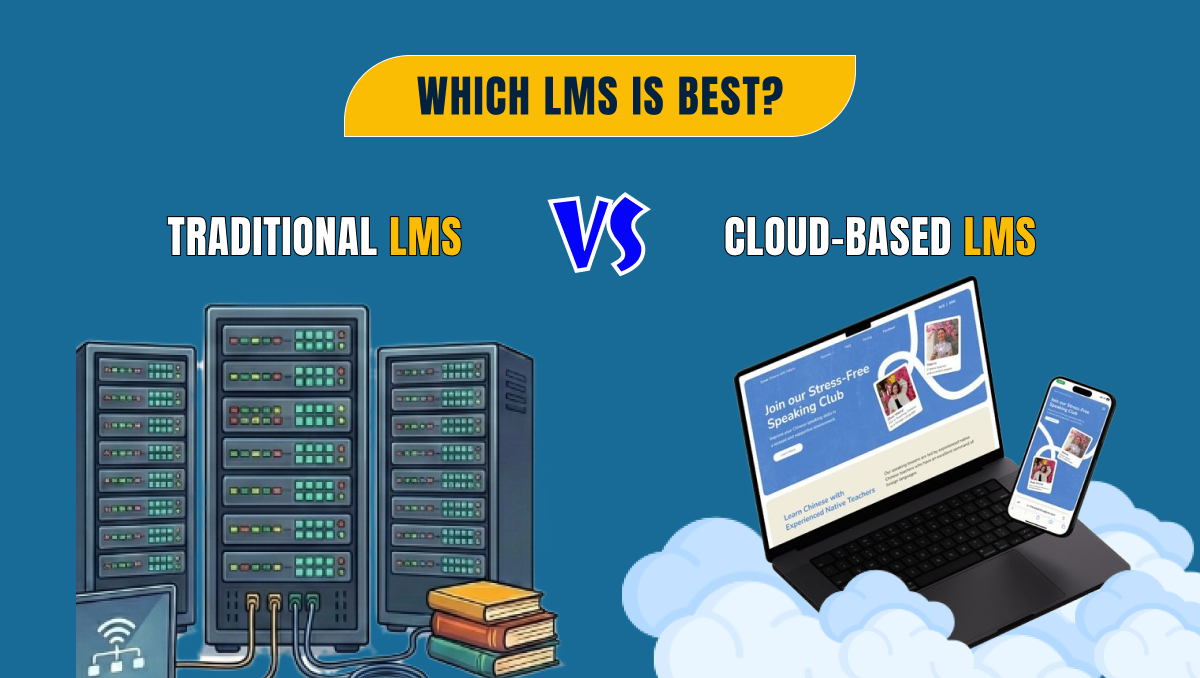
The education sector is rapidly moving toward digital learning, and Learning Management Systems (LMS) have become essential for schools, colleges, universities, coaching centers, and businesses. Today, many institutions are asking one important question: Should they choose a Cloud-Based LMS or a Traditional LMS?
Both systems help manage online classes, assignments, student progress, communication, exams, and course materials. However, they differ in terms of cost, accessibility, maintenance, scalability, security, and performance.
In this article, we will compare Cloud-Based LMS vs Traditional LMS in a simple and understandable way to help educational institutions and businesses choose the best LMS platform for modern learning.
What Is a Cloud-Based LMS?
A Cloud-Based LMS is an online learning platform hosted on cloud servers. Users can access it through the internet using laptops, tablets, or mobile devices without installing software on local computers.
Cloud LMS platforms are becoming popular because they support remote learning, online education, hybrid classrooms, and mobile learning.
Key Features of Cloud-Based LMS:
- Access learning anytime and anywhere
- Automatic software updates
- Lower infrastructure and maintenance cost
- Easy scalability for growing institutions
- Secure cloud data storage
- Mobile-friendly learning experience
- Supports remote and hybrid education
What Is a Traditional LMS?
A Traditional LMS, also called an On-Premise LMS, is installed on an institution’s own servers and managed internally by its IT department.
The organization is responsible for maintenance, software updates, security, and system management.
Traditional LMS platforms are usually preferred by organizations that want full control over their system and data.
Key Features of Traditional LMS
- Installed on local servers
- Full control over system and data
- Internal security management
- One-time licensing cost
- Requires dedicated IT infrastructure
- Manual updates and maintenance
Cloud-Based LMS vs Traditional LMS
1. Accessibility and Flexibility
Cloud-Based LMS
A Cloud-Based LMS allows students and teachers to access courses from anywhere with an internet connection. This makes it ideal for:
- Online learning
- Distance education
- Remote work training
- Hybrid classrooms
- Traditional LMS
Traditional LMS platforms are usually limited to internal networks and may require special configurations for remote access.
2. Installation and Maintenance
Cloud-Based LMS
Cloud LMS platforms are easy to set up because the service provider handles:
- Server management
- System updates
- Security patches
- Technical maintenance
Traditional LMS
Traditional LMS requires:
- Server installation
- Internal IT teams
- Regular maintenance
- Manual software updates
3. Cost Comparison
Cloud-Based LMS
Cloud-based systems usually work on subscription pricing, making them more affordable for schools and businesses with limited budgets.
Benefits include:
- Lower startup cost
- No expensive hardware
- Reduced maintenance expenses
Traditional LMS
Traditional LMS systems require:
- High upfront investment
- Dedicated servers
- IT infrastructure
- Ongoing maintenance costs
4. Security and Data Control
Cloud-Based LMS
Modern cloud LMS providers offer:
- Data encryption
- Automatic backups
- Disaster recovery systems
- Advanced cybersecurity protection
Traditional LMS
Traditional LMS gives organizations complete control over:
- Data storage
- Security policies
- Internal access management
5. Scalability
Cloud-Based LMS
Cloud LMS platforms can easily support increasing numbers of students, teachers, and courses without major infrastructure upgrades.
Traditional LMS
Scaling traditional systems often requires:
- New hardware
- Server upgrades
- Higher IT costs
6. Performance and Automatic Updates
Cloud-Based LMS
Cloud platforms provide automatic updates and performance improvements without interrupting users.
Traditional LMS
Traditional LMS updates must be manually installed and tested by the organization.
Advantages of Cloud-Based LMS
Why Educational Institutions Prefer Cloud LMS?
- Lower operational cost
- Easy remote access
- Faster implementation
- Automatic updates and backups
- Better mobile learning support
- Easy scalability
- Reduced IT workload
- Supports online and hybrid learning
Advantages of Traditional LMS
Why Some Organizations Still Use Traditional LMS
- Full ownership and control
- Internal data hosting
- Greater customization options
- Suitable for organizations with strong IT infrastructure
- Better for institutions with strict internal policies
Which LMS Is Better for Schools, Colleges, and Businesses?
For most modern educational institutions and businesses, a Cloud-Based LMS is usually the preferred choice because it offers:
- Better accessibility
- Lower maintenance cost
- Faster deployment
- Improved collaboration
- Remote learning support
- Flexible online education solutions
Cloud LMS platforms are especially useful for:
- Schools and colleges
- Universities
- Coaching centers
- Corporate training
- Online learning platforms
However, organizations that require complete data control and internal hosting may still prefer Traditional LMS systems.
Future of Learning Management Systems (LMS)
The future of LMS platforms is strongly connected with:
- Artificial Intelligence (AI)
- Mobile learning
- Cloud computing
- Learning analytics
- Personalized education
Modern Cloud-Based LMS platforms now support:
- AI-powered learning recommendations
- Real-time collaboration tools
- Video conferencing integration
- Advanced reporting and analytics
- Interactive online classrooms
As digital education continues to grow worldwide, cloud-based learning platforms are becoming the standard solution for modern education and training.