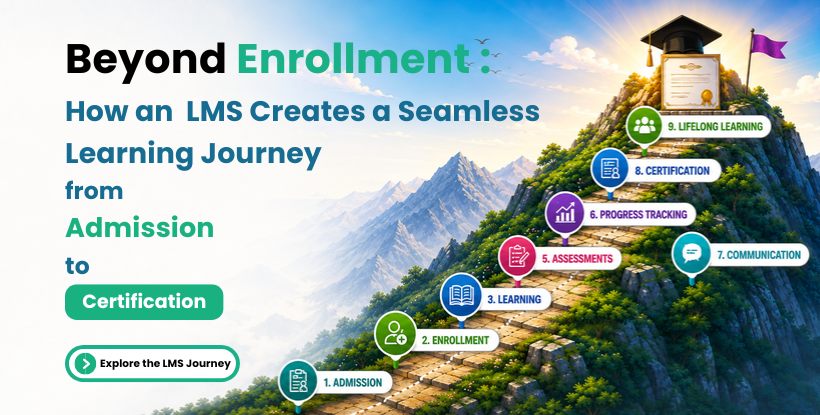
A student's learning journey begins before the first class and continues even after course completion. Managing every stage manually can be time-consuming and prone to errors.
A modern Learning Management System brings admissions, learning, assessments, communication, and certification together in one place, making education more organized, efficient, and learner-focused.
What Is the Student Journey?
The student journey covers every step of a learner's experience, including:
* Online admission
* Course enrollment
* Learning activities
* Attendance
* Assignments
* Online exams
* Progress tracking
* Certificates
* Alumni engagement
Managing these stages in one system creates a smoother experience for both students and educators.
Why Use One LMS for Everything?
Using a single LMS helps institutions:
* Save administrative time
* Reduce paperwork
* Improve student engagement
* Track learner progress
* Generate instant reports
* Deliver a better learning experience
A centralized platform keeps all student information secure and easy to manage.
Step 1: Online Admissions
An LMS digitizes the admission process with online forms, document uploads, and automated approvals. This reduces paperwork and speeds up student onboarding.
Step 2: Course Enrollment
Students can enroll in courses quickly through self-registration or administrator approval. Once enrolled, they can access learning materials immediately.
Step 3: Learning & Course Delivery
An LMS supports video lessons, live classes, quizzes, downloadable resources, and self-paced learning, allowing students to learn anytime and anywhere.
Step 4: Attendance Management
Attendance is recorded automatically through online sessions or live classes, helping institutions maintain accurate records with less manual work.
Step 5: Assignments & Assessments
Educators can create assignments, quizzes, and online exams while providing faster grading and instant feedback to students.
Step 6: Progress Tracking
Real-time dashboards and learning analytics help institutions monitor student performance, identify learning gaps, and support academic success.
Step 7: Student Communication
Announcements, notifications, reminders, and discussion forums keep students informed and encourage active participation throughout the course.
Step 8: Digital Certification
After completing a course, students receive secure digital certificates that can be downloaded, verified, and shared instantly.
Step 9: Lifelong Learning
An LMS continues supporting learners by offering advanced courses, professional training, and alumni engagement opportunities even after certification.
Conclusion
Managing the complete student lifecycle becomes much easier with a modern Learning Management System. By combining admissions, learning, assessments, attendance, communication, reporting, and certification into one platform, institutions can improve efficiency while delivering a better learning experience.
As digital education continues to grow, adopting an all-in-one LMS is a smart investment for schools, colleges, universities, coaching centers, and training institutes looking to provide quality education and simplify academic management.