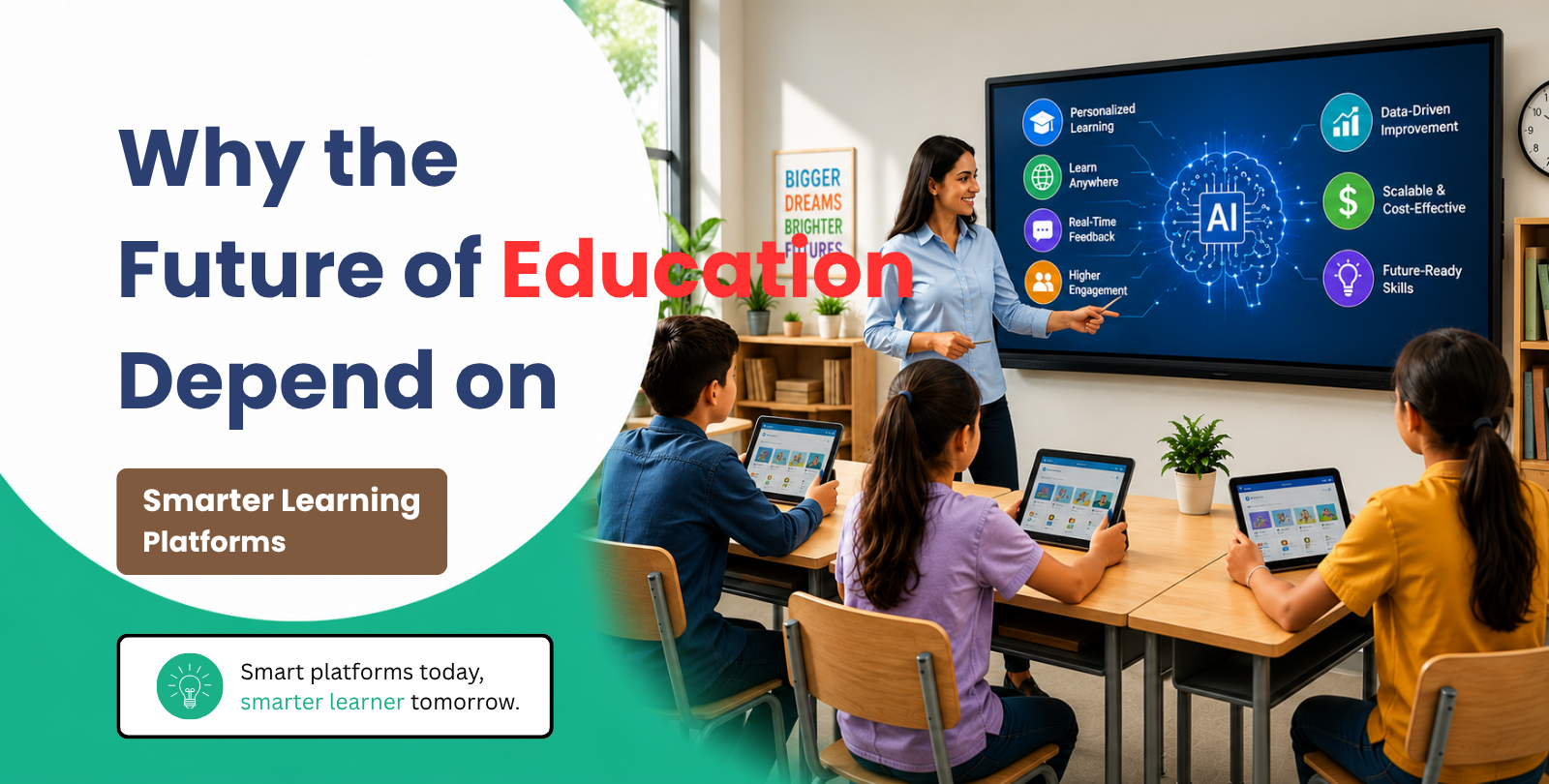
The future of education depends on smarter learning platforms because they make learning more personalized, accessible, engaging, and efficient. Traditional education often follows a one-size-fits-all approach, which may not meet the needs of every learner. Intelligent digital platforms use technologies such as artificial intelligence (AI), cloud computing, and learning analytics to adapt content, track progress, and provide better support for both students and teachers.
1.Personalized Learning
Smarter platforms analyze student performance and learning behavior to recommend lessons, quizzes, and resources that match individual needs. This allows students to learn at their own pace and focus on areas where they need improvement.
2.Anytime, Anywhere Access
Cloud-based learning platforms enable students to access courses from any device and location. This supports online, hybrid, and lifelong learning, making education more inclusive for remote learners, working professionals, and people with limited access to traditional classrooms.
3.Real-Time Feedback
Teachers can monitor attendance, participation, assignments, and assessment results instantly. Identifying struggling students early makes it possible to provide timely support and improve overall learning outcomes.
4. Higher Engagement
Interactive videos, simulations, gamification, discussion forums, and mobile-friendly tools make learning more engaging than traditional lecture-based methods. These features increase student motivation, participation, and knowledge retention.
5. Data-Driven Improvement
Educational institutions can use learning data to evaluate course effectiveness, improve teaching strategies, and refine curriculum design. This leads to continuous improvement in the quality of education.
6. Scalable and Cost-Effective
Digital courses can be delivered to thousands of learners with relatively low additional cost. As a result, smart learning platforms are valuable for schools, universities, training centers, government programs, and corporate learning initiatives.
7. Preparing Learners for the Future
Beyond academic knowledge, these platforms help students develop digital literacy, self-directed learning, collaboration, communication, and problem-solving skills that are essential in a technology-driven economy.
Conclusion
Smarter learning platforms are becoming the foundation of modern education because they personalize learning, expand access and flexibility, provide real-time feedback, improve engagement, support data-driven decisions, reduce delivery costs, and prepare learners for the digital workforce.
As education continues to evolve, intelligent learning platforms are doing more than supporting traditional teaching methods. They are helping build a more adaptive, inclusive, and future-ready learning ecosystem that can meet the changing needs of students, educators, and institutions in the digital age.