The Shift Toward Digital Learning
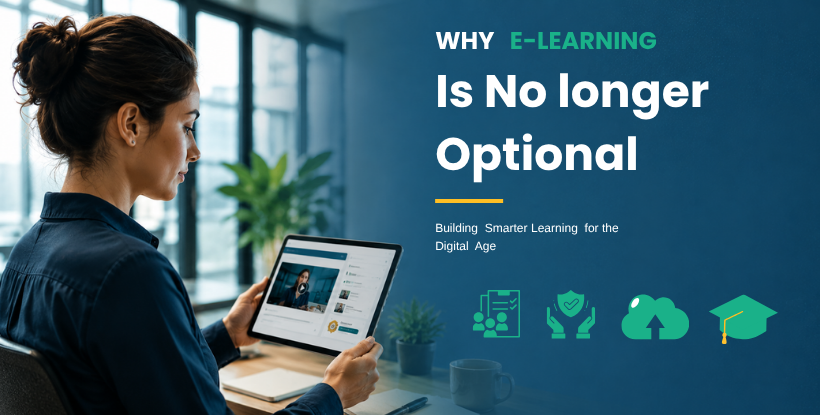
The way organizations and educational institutions approach learning has changed significantly over the past decade. Traditional classroom-based training alone is no longer enough to meet the demands of today's fast-moving digital world. As technology continues to reshape education and the workplace, **e-learning** has evolved from a convenient option into a fundamental part of modern learning strategies.
Whether the goal is to educate students, onboard new employees, or provide ongoing professional development, organizations need learning solutions that are flexible, accessible, and scalable. E-learning makes this possible by allowing learners to access educational content anytime, anywhere, and from virtually any device.
Why E-Learning Has Become Essential?
Modern organizations operate in an environment where knowledge, skills, and technologies are constantly evolving. To remain competitive and prepared for future challenges, they must ensure that learning is continuous rather than occasional.
Unlike traditional training, which often requires fixed schedules, physical classrooms, and significant administrative effort, e-learning provides a more efficient and learner-centered approach. Courses can be updated quickly, distributed instantly, and accessed by thousands of learners simultaneously. This flexibility helps institutions respond rapidly to changing educational and industry requirements while reducing both time and operational costs.
How a Learning Management System Enhances E-Learning?
A modern Learning Management System (LMS) plays a vital role in delivering effective e-learning experiences. Instead of managing courses, assessments, learner records, and communication across multiple tools, an LMS brings everything together within a single, centralized platform.
Educational institutions can create and organize courses, automate enrollments, conduct online assessments, issue certificates, monitor learner progress, and generate comprehensive performance reports. Faculty members gain better visibility into student engagement, while administrators can streamline routine tasks and focus more on improving learning quality.
Creating Better Learning Experiences
Today's learners expect more than static presentations or recorded video lectures. They look for interactive, engaging, and personalized learning experiences that keep them motivated throughout their learning journey.
Modern e-learning platforms support a variety of learning methods, including multimedia lessons, interactive quizzes, discussion forums, collaborative activities, assignments, and self-paced learning paths. These features accommodate different learning styles, encourage active participation, and improve knowledge retention. Learners can also revisit lessons whenever needed, making it easier to reinforce concepts and learn at their own pace.
Supporting Continuous Growth and Skill Development
As new technologies and industry practices emerge, educational content must evolve just as quickly. E-learning enables institutions and organizations to revise course materials, introduce new topics, and deliver updated information without disrupting existing learning programs.
This adaptability is especially valuable for educational institutions that need to keep curricula current and prepare students with relevant, future-ready skills. By promoting continuous learning, organizations can close knowledge gaps, improve academic outcomes, and support long-term personal and professional development.
Conclusion
E-learning is no longer simply a digital alternative to classroom instruction—it has become a strategic investment in the future of education and workforce development. Combined with a powerful Learning Management System, it enables institutions to deliver engaging learning experiences, simplify academic administration, improve learner outcomes, and foster a culture of continuous improvement.
As digital learning continues to evolve, organizations that embrace e-learning today will be better equipped to meet the changing expectations of learners, educators, and the modern workforce. Investing in the right e-learning strategy is no longer just an opportunity—it's an essential step toward building a more resilient, innovative, and future-ready organization.