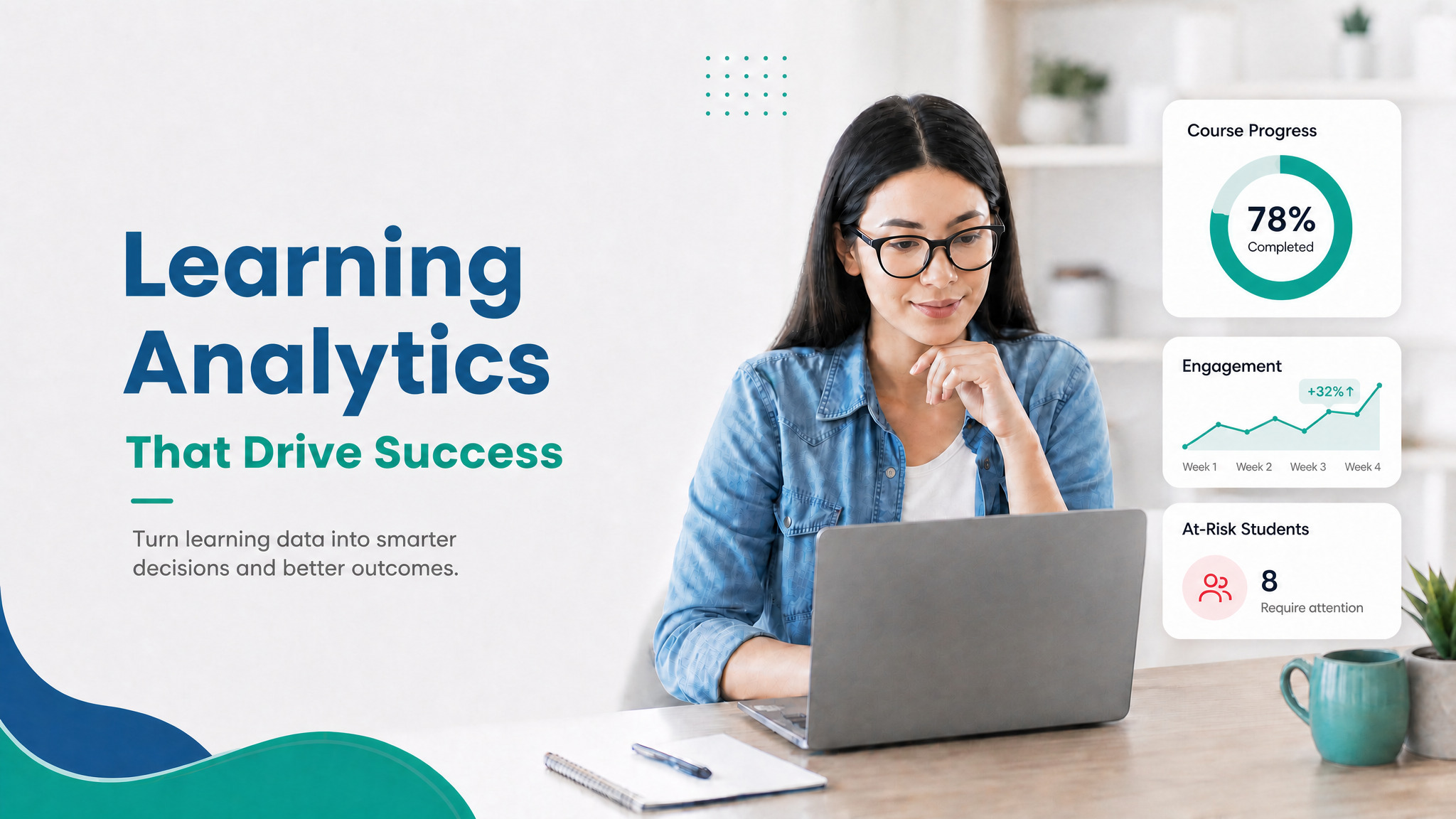
What Is Learning Analytics?
Education is going digital fast, and with that shift, schools, colleges, universities, and training centers are producing enormous amounts of learning data every single day attendance logs, assignment submissions, quiz results, discussion activity, and more. Each of these data points offers a small window into how a student is actually learning. Learning Analytics brings these pieces together: it's the practice of collecting, measuring, analyzing, and interpreting learner data to understand behavior, sharpen teaching strategies, and ultimately help students succeed.
Where traditional evaluation leans almost entirely on final exam scores, learning analytics tells a fuller story. It follows a student's progress continuously — not just at the end so educators can track engagement, spot patterns, and make decisions grounded in real data instead of guesswork.
Inside an LMS, this typically means capturing signals like course engagement, assessment scores, login frequency, attendance, assignment completion, discussion participation, time spent on materials, and overall course progress. Once this data is turned into clear reports and dashboards, educators can quickly see where a student is excelling, where gaps are forming, and step in with support before those gaps turn into real setbacks.
Why Educational Institutions Need It?
Institutions today are under real pressure bigger classrooms, more diverse learners, and higher expectations for outcomes, all at once. The traditional toolkit periodic exams, manual attendance sheets, in-class observation still matters, but it was never built to catch problems early. By the time a gap shows up on a report card, the moment to intervene has often already passed.
Learning analytics changes that. Instead of discovering issues at the end of a semester, educators get a live picture of how students are doing and can act while there's still time to make a difference. Institutions that skip this typically run into a familiar set of problems:
- At-risk students go unnoticed until it's too late
- Engagement and participation are hard to see clearly
- No reliable way to tell which teaching methods are actually working
- Feedback becomes inconsistent once class sizes grow
- Academic planning ends up reactive instead of strategic
- Retention drops simply because help arrives too late
With learning analytics in place, institutions get a much clearer read on student behavior making it possible to boost academic performance, deepen engagement, and keep improving continuously, not just once a year.