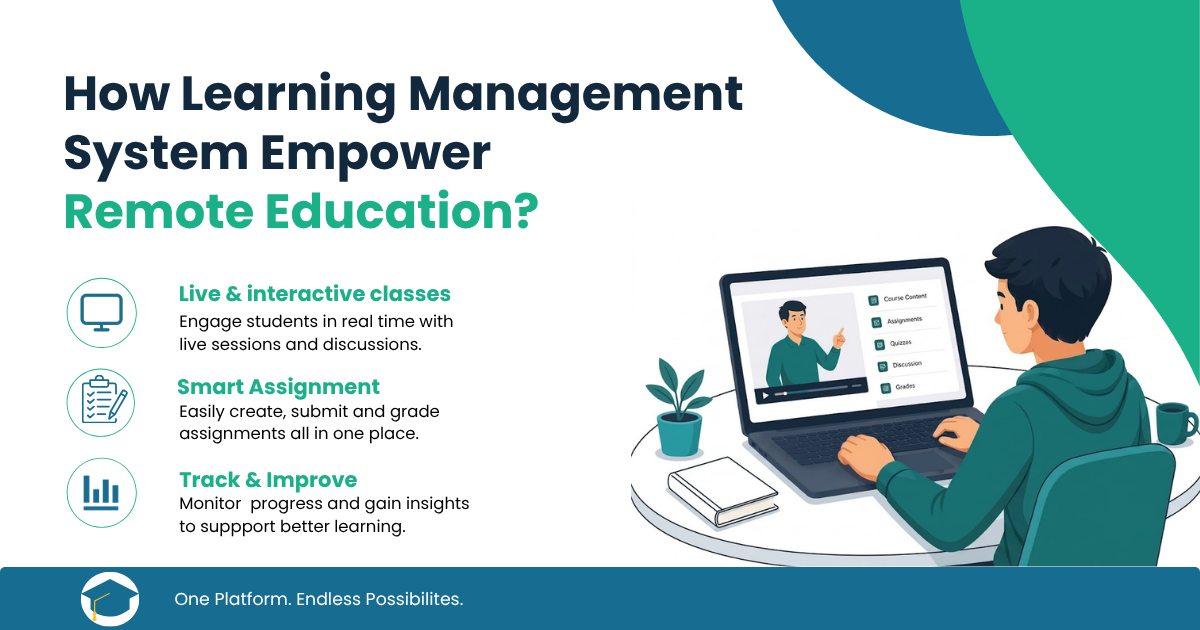
Remote education has become an essential part of modern learning. Today, students are no longer limited to physical classrooms. With the help of digital technology, learning can take place from anywhere in the world.
A remote education LMS provides a complete solution for this shift. A Learning Management System allows teachers to deliver lessons online, manage courses efficiently, and track student performance in one centralized platform.
What Is Remote Education?
Remote education is a learning method where teaching and learning are conducted online instead of in a traditional classroom environment.
Through an online education platform, students can attend live classes, access study materials, and complete assignments without being physically present.
This approach is widely adopted by:
- Schools
- Colleges
- Universities
- Coaching institutes
- Corporate training centers
How Learning Management Systems Support Remote Education?
1. Centralized Virtual Learning Platform
An LMS works as a virtual learning platform where all educational resources are stored in one place.
Teachers can upload:
- Notes
- Videos
- Assignments
- Quizzes
- Learning materials
Students can access everything anytime, making learning more flexible, organized, and accessible.
2. Virtual Classroom Features
Modern LMS platforms provide a complete virtual classroom LMS experience, including:
- Live online classes
- Video conferencing
- Screen sharing
- Recorded lectures
This allows real-time interaction between teachers and students, similar to a physical classroom.
3. Improved Communication
An LMS improves communication in remote education LMS environments by offering:
- Chat systems
- Discussion forums
- Notifications
- Important announcements
This ensures students and teachers stay connected even outside class hours.
4. Online Exams and Assignment Management
An eLearning management system makes assessments easier and more efficient.
Teachers can:
- Create online tests and quizzes
- Set submission deadlines
- Automatically evaluate answers
- Provide instant feedback
This reduces manual workload and improves academic efficiency.
5. Student Performance Tracking
An LMS helps institutions monitor student progress effectively, including:
- Attendance records
- Exam results
- Assignment submissions
- Learning activity reports
This helps educators identify strengths and areas that need improvement.
6. Flexible Learning Experience
A distance education system gives learners the freedom to study at their own pace.
- Students can:
- Learn anytime
- Use any device
- Manage their own schedule
- Balance studies with work or personal life
7. Mobile-Friendly Learning
Most online classroom software solutions are mobile-compatible, allowing students to learn on the go.
They can:
- Join classes from smartphones
- Watch recorded lectures anytime
- Submit assignments easily
This improves accessibility and supports modern learning habits.
Benefits of LMS in Remote Education
- Enhanced Learning Experience
- Interactive features make learning more engaging and easier to understand.
- Cost Efficiency
- It reduces costs related to travel, printed materials, and physical infrastructure.
- Organized Education System
- All learning activities are managed in one place, improving structure and efficiency.
- Better Student Engagement
- Tools like quizzes, videos, and discussions increase student participation.
- Time-Saving Automation
- Grading, attendance, and management tasks are automated, saving time for teachers and institutions.
Future of Remote Education with LMS
The future of virtual learning platforms is rapidly evolving with advanced technologies such as:
- Artificial Intelligence (AI)
- Personalized learning systems
- Cloud-based LMS platforms
- Smart learning analytics
- Gamified education tools
These innovations will make LMS for remote learning more personalized, interactive, and effective.