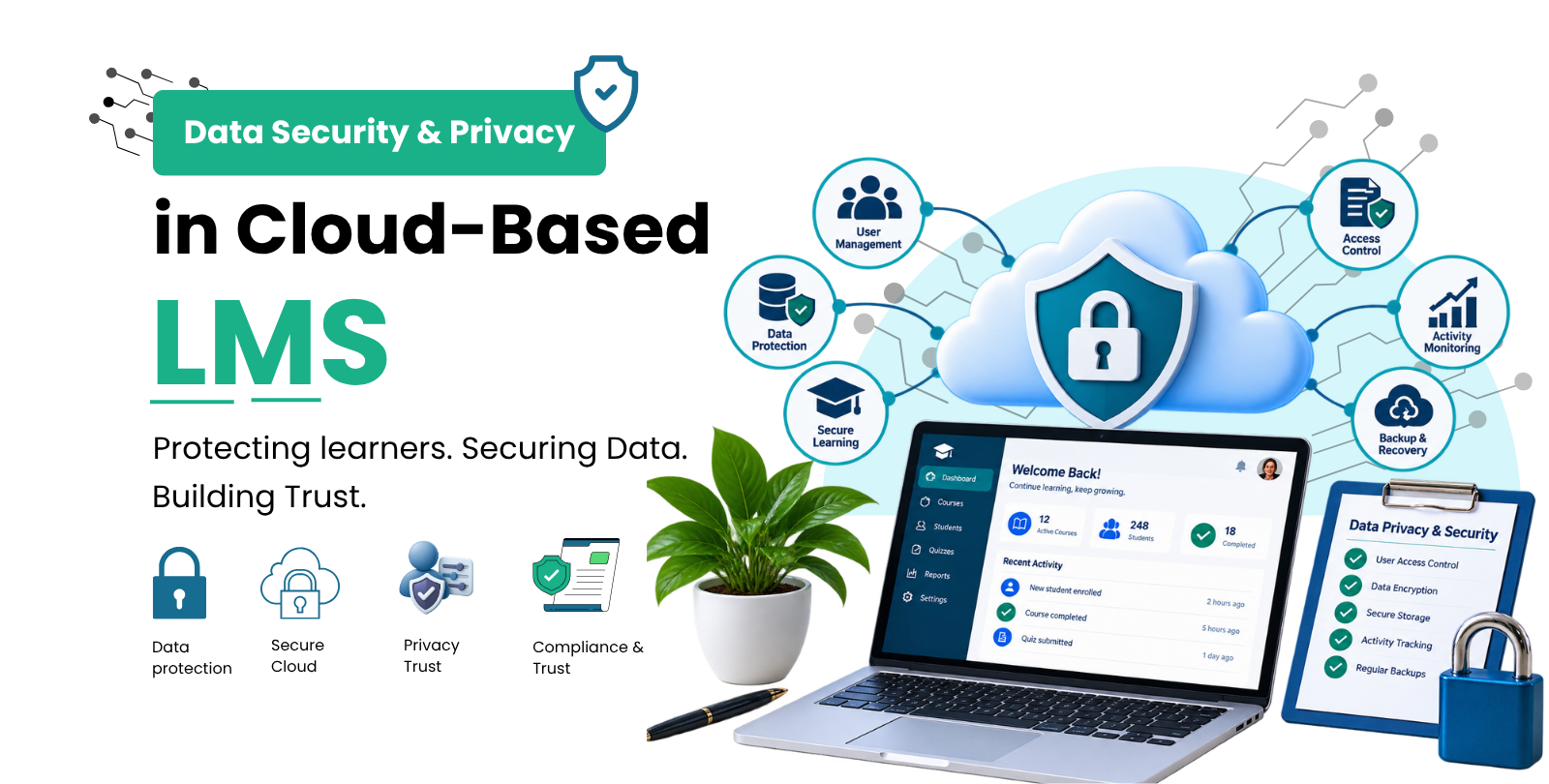
What Is Data Security and Privacy in a Cloud-Based LMS?
Data security and privacy in a cloud-based Learning Management System (LMS) refer to protecting learner, instructor, and organizational data stored online. A secure cloud LMS helps prevent unauthorized access, data loss, cyberattacks, and misuse of sensitive information.
Cloud LMS platforms may store user profiles, login details, course progress, assessment results, certificates, attendance, and learning analytics. Therefore, strong security and privacy measures are essential.
Why Are Security and Privacy Important in a Cloud-Based LMS?
Cloud LMS platforms store large amounts of learning data on remote servers. Strong security helps organizations:
* Protect sensitive learner data
* Prevent unauthorized access
* Reduce data breach risks
* Secure data during storage and transfer
* Maintain reliable access to learning systems
* Build trust among learners and organizations
Key Data Security Features in a Cloud-Based LMS
1. Data Encryption
Encryption protects data by converting it into a secure format. A reliable LMS should protect data both at rest and in transit.
2. Role-Based Access Control
Role-based access ensures users can only access information and features relevant to their responsibilities.
For example, administrators can manage the system, instructors can manage courses, and learners can access their assigned content.
3. Strong Authentication
Strong passwords, multi-factor authentication (MFA), and secure login systems help prevent unauthorized access to LMS accounts.
4. Regular Backups
Regular backups help organizations recover important learning data after accidental deletion, system failure, or security incidents.
5. Security Monitoring and Audit Logs
Monitoring login activity, access attempts, and administrative changes helps identify suspicious activity and investigate security issues 6. Secure Software Updates
Regular software and security updates help protect the LMS from known vulnerabilities and emerging security threats.
Privacy Protection in a Cloud-Based LMS
Data security protects information from unauthorized access, while **data privacy focuses on how personal information is collected, used, stored, shared, and deleted**.
A privacy-focused LMS should clearly explain:
* What data is collected
* Why the data is collected
* Who can access it
* How long it is stored
* Whether it is shared with third parties
* How data can be deleted when appropriate
Cloud LMS Compliance and Data Protection
Privacy requirements can vary depending on the organization, location, and type of learner data involved. Organizations should check whether their LMS provider follows relevant privacy, security, and contractual requirements.
Important areas include data retention, user consent, third-party integrations, access controls, and breach response.
How to Choose a Secure Cloud-Based LMS?
Before selecting a cloud LMS, organizations should check its security and privacy capabilities.
Key questions include:
* Is data encrypted?
* Does the LMS support MFA?
* Are role-based permissions available?
* Are regular backups maintained?
* Does the provider monitor security activity?
* Where is the data stored?
* How is data retained and deleted?
* How are security incidents handled?
* Does the provider have relevant security or compliance certifications?
Best Practices for Cloud LMS Data Security
Organizations can improve LMS security by:
1. Using strong passwords and MFA.
2. Giving users only the permissions they need.
3. Regularly reviewing user access.
4. Keeping software and integrations updated.
5. Monitoring suspicious account activity.
6. Maintaining secure backups.
7. Collecting only necessary personal information.
8. Reviewing third-party integrations.
9. Following a clear data retention policy.
10. Training users about basic security practices.
Conclusion
Data security and privacy are essential for any cloud-based LMS. Features such as encryption, access control, authentication, backups, monitoring, and secure updates help protect learner and organizational data.
Organizations should evaluate an LMS provider's security and privacy practices carefully to ensure their learning data remains protected while supporting a reliable and trusted online learning environment.